


Dark
Light
Long ago, in the heart of Japan, where mist rolled over rice fields and temple bells echoed through the valleys, seven divine figures emerged to guide humankind toward happiness and prosperity. Known as the Japanese Seven Gods of Fortune (七福神, Shichifukujin), these deities became symbols of luck, wisdom, and joy. Their stories weave together threads of Shinto, Buddhist, Taoist, and Hindu traditions, forming one of the most enchanting mythologies in the world.
The Tale of Japan’s Seven Lucky Gods Begins
In the world of iGaming and casino entertainment, luck is more than chance; it’s a philosophy. Few mythologies capture this better than Japan’s Seven Gods of Fortune, known as 七福神 (Shichifukujin). These deities embody prosperity, wisdom, creativity, and happiness, values that resonate deeply with players seeking success in games of chance and skill.
The Seven Lucky Gods in Japanese Mythology
The Japanese Seven Gods of Fortune, also known as the Seven Lucky Gods of Japan or Japanese Lucky 7 Gods, represent different aspects of prosperity and success. Each deity’s traits align perfectly with the psychology of gaming and risk‑taking.
| God | Domain | Casino Parallel |
|---|---|---|
| Ebisu (恵比須) | Prosperity, fishing, commerce | Symbol of steady wins and patience |
| Daikokuten (大黒天) | Wealth, agriculture, commerce | Patron of jackpots and abundance |
| Bishamonten (毘沙門天) | Warriors, protection | Guardian of high‑stakes players |
| Benzaiten (弁才天) | Music, art, eloquence | Creativity and flow in gameplay |
| Fukurokuju (福禄寿) | Wisdom, longevity, happiness | Strategic thinking and endurance |
| Jurōjin (寿老人) | Longevity, health | Sustainable play and bankroll management |
| Hotei (布袋) | Contentment, abundance | Joyful wins and positive mindset |
Together, they form the 7 Japanese Gods of Fortune, a pantheon that mirrors the balance between risk and reward, core principles in casino gaming.
Japan’s Seven Lucky Gods Symbolism and Origins
Japan’s seven lucky gods are a blend of Shinto, Buddhist, Taoist, and Hindu influences. This multicultural mix mirrors the global nature of iGaming today, where players from different cultures share one universal pursuit: luck.
- Shinto roots: Ebisu, the only native Japanese god, embodies honest work and fair reward, values mirrored in responsible gaming.
- Buddhist and Hindu origins: Daikokuten and Benzaiten bring spiritual wealth and creativity, inspiring slot designs and game narratives.
- Taoist influence: Fukurokuju and Jurōjin represent longevity and wisdom, traits essential for long‑term success in poker or trading‑style games.
Ebisu – The Cheerful Fisherman

Ebisu, the only god born from Japanese soil, is the patron of fishermen, merchants, and honest work. With his fishing rod and sea bream (tai), he embodies patience and reward. Known as the Japanese God of New Year, Ebisu’s laughter rings through celebrations, reminding people that fortune favours those who persevere.
Daikokuten – The Wealth Bringer

Daikokuten sits atop a golden sack of treasure in a sunlit rice field. His mallet (uchide no kozuchi) grants abundance with every swing. Farmers and merchants pray to him for prosperity, and his laughter fills granaries and marketplaces alike. He represents the joy of earned wealth and the generosity that sustains communities.
Bishamonten – The Protector of Warriors

Clad in shining armour, Bishamonten stands guard over the righteous. He holds a spear and a pagoda, symbols of strength and faith. In ancient times, samurai prayed to him before battle; today, he represents courage and resilience. His story teaches that fortune favours the brave and that protection comes to those who act with honour.
Benzaiten – The Muse of Music and Art

Benzaiten, the only female among the Seven Lucky Gods, plays her biwa (Japanese lute) beside a flowing river. Her melodies inspire creativity, eloquence, and love. Artists, musicians, and writers seek her blessing to awaken their talents. Her presence reminds us that fortune also lies in beauty and expression.
Fukurokuju – The Wise Elder

With his elongated forehead and gentle smile, Fukurokuju (福禄寿) embodies wisdom, longevity, and happiness. He walks with a cane and carries a scroll of knowledge. Known as the Japanese God Fukurokuju, he teaches that true fortune comes from understanding and balance. His story is one of patience and insight, a reminder that wisdom is the greatest treasure.
Jurōjin – The Guardian of Longevity
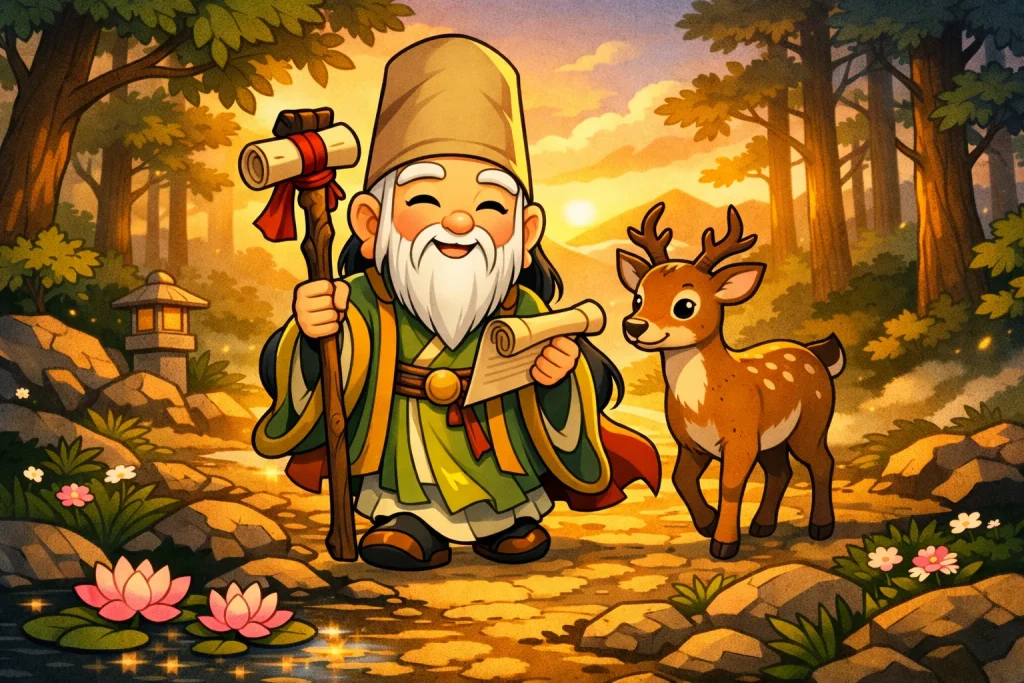
Jurōjin, often confused with Fukurokuju, is the god of long life and health. He carries a staff and a scroll that holds the secrets of the universe. A deer walks beside him, symbolising vitality. He reminds us that fortune is not only wealth but also the gift of time and well-being.
Hotei – The Laughing Monk

Hotei, the jolly monk with a sack full of treasures, is the god of happiness and abundance. His laughter is said to bring joy to all who hear it. He wanders freely, sharing gifts and smiles. In modern times, Hotei’s image inspires positivity and generosity, a reminder that happiness multiplies when shared.
The Takarabune – The Treasure Ship of Fortune

On New Year’s Eve, the Seven Lucky Gods sail together on the Takarabune, a treasure ship filled with jewels, scrolls, and rice. As the waves shimmer beneath the moonlight, they bring blessings to every shore. Families place drawings of the ship under their pillows to dream of good fortune, a tradition that continues to this day.
The Eternal Blessing of the Japanese 7 Lucky Gods
The Japanese Seven Gods of Fortune remind us that luck is not random; it’s cultivated through wisdom, kindness, creativity, and perseverance. Their stories live on in art, festivals, and even modern gaming culture, where fortune still dances between chance and choice.
Whether you seek wealth like Daikokuten, wisdom like Fukurokuju, or joy like Hotei, the Shichifukujin offer a timeless message: fortune favours the balanced heart.
Frequently Asked Questions
What are the 7 Gods of Fortune in Japan?
The Seven Lucky Gods: Ebisu, Daikokuten, Bishamonten, Benzaiten, Fukurokuju, Jurōjin, and Hotei represent prosperity, wisdom, and happiness in Japanese mythology.
Who is the Japanese God of the New Year?
Ebisu is celebrated as the Japanese God of the New Year, symbolising renewal, prosperity, and optimism for the year ahead.
Who is the Japanese God Fukurokuju?
Fukurokuju is the god of wisdom, longevity, and happiness, often depicted with a crane and a scroll of knowledge.
What is the Seven Lucky Gods mythology?
The Seven Lucky Gods mythology blends Shinto, Buddhist, Taoist, and Hindu traditions, representing different forms of good fortune and balance in life.
Why are the Japanese Seven Gods of Fortune important?
They embody universal virtues: wealth, wisdom, creativity, protection, and joy, making them enduring symbols of luck and prosperity in Japanese culture.


Sign Up for Our Newsletters
Be the first to know when new content is created.Related Posts

The Life & Career of Billy Walters: The Man Who Mastered Sports Betting with Computer Models
Billy Walters is widely regarded as the most successful sports bettor in American history — a man whose 30‑year winning streak, data‑driven betting system, and relentless discipline reshaped the sports wagering industry. His story blends grit, analytics, entrepreneurship, and controversy, making him one of the most influential figures in modern gambling. Walters’ journey from rural poverty to becoming a multimillionaire entrepreneur and New York Times bestselling author is not just a biography — it’s a blueprint for how data and discipline can outperform intuition and luck.

Stu “The Kid” Ungar: The Tragedy of Poker’s Greatest Mind
Early Life and Rise of a Card Prodigy How Stu Ungar Became a Poker Legend Stu Ungar World…

Joseph Jagger vs Charles De Ville Wells: The Men Who Broke the Bank at Monte Carlo
Two gamblers, Joseph Jagger and Charles De Ville Wells, became legends for “breaking the bank” at Monte Carlo. Their stories reveal contrasting paths to fortune: one guided by engineering precision, the other by audacious risk. This article compares their backgrounds, motivations, and methods, showing how their exploits reshaped modern casino design and fairness.

Martin Carlesund Net Worth: How Evolution’s CEO Built His iGaming Fortune
Martin Carlesund’s net worth has become a major point of interest in the iGaming world. As CEO of Evolution Group, he has built substantial wealth through executive compensation, equity ownership, and strategic acquisitions that reshaped the global live casino industry. His financial success mirrors Evolution’s rise to dominance.