


Dark
Light
Benny Binion, a legendary figure in Las Vegas history, built a gambling empire that transformed the casino industry. From outlaw roots in Texas to founding Binion’s Horseshoe Casino, his story is one of grit, innovation, and controversy. This article explores his net worth, legacy, and rise to prominence.
Early Life and Criminal Beginnings
Born in 1904 in Pilot Grove, Texas, Lester Ben “Benny” Binion grew up in a world where survival demanded cunning and toughness. Sickly as a child and lacking formal education, Binion found his calling in gambling. He learned the trade from horse traders and bootleggers, quickly mastering the art of playing dice games and placing bets.
In the 1920s and 1930s, Binion operated illegal moonshine stills and gambling dens in Dallas. His reputation grew as a shrewd operator who could outwit rivals and corrupt officials. He was known for his generosity to friends and brutality toward enemies. His criminal record included multiple arrests, and he was suspected in several murders, though never convicted. Despite his outlaw status, Binion cultivated political connections that allowed him to thrive in Dallas’s underworld.
“I never did make no money bootlegging… just kept me poor as a church mouse all the time.”
Binion’s early years laid the foundation for his future success. He combined street smarts with a gambler’s instinct, building a network of loyal associates and establishing himself as a force in the Texas gambling scene. But as law enforcement pressure mounted, Binion looked westward—to Las Vegas, where gambling was legal, and opportunity awaited.
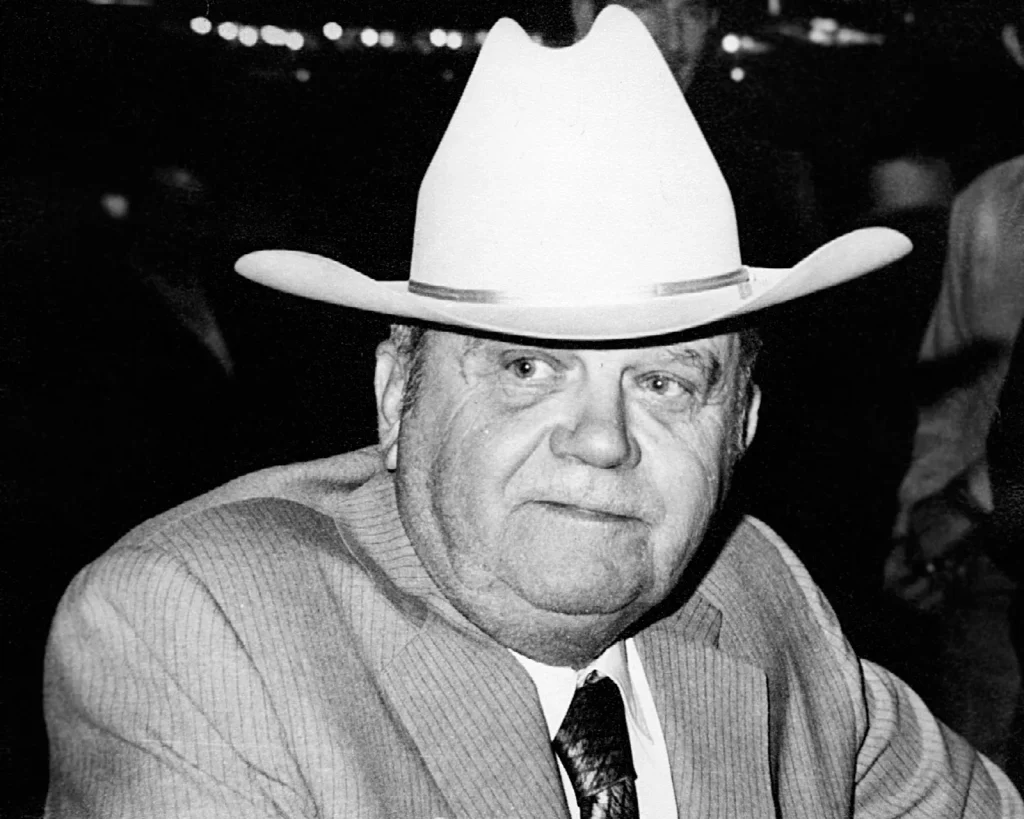
Rise in Dallas: The Southland Syndicate
In Dallas, Binion’s empire flourished under the protection of corrupt officials and a network of enforcers. He ran the Southland Syndicate, a powerful gambling operation that controlled dice games, bookmaking, and numbers rackets across the city. His operations were known for high stakes, fast action, and ruthless enforcement.
Binion’s success stemmed from his ability to blend business acumen with criminal savvy. He paid off police and politicians to avoid raids, and he eliminated competition through intimidation or violence. His dice games were legendary, attracting wealthy oilmen and thrill-seekers. Binion’s reputation as a gambler’s gambler grew, and he became a folk hero among Dallas’s underworld.
However, his dominance came at a cost. Rival gangs and shifting political winds made Dallas increasingly dangerous. In 1946, facing indictment for tax evasion and fearing assassination, Binion fled to Las Vegas. He left behind a criminal empire but carried with him the skills and ambition to build something even bigger.
Move to Las Vegas: Legal Gambling and Opportunity
Las Vegas in the 1940s was a burgeoning desert town with legalized gambling and a hunger for investment. Binion arrived with cash, connections, and a vision. He saw the potential to create a casino that treated gamblers fairly and offered high-stakes action without the corruption of Dallas.
“Everybody had his little ways of doing somethin’ to the cards – marking ’em, crimpin’ ’em. I got in with more of a gamblin’ type – you might say road gamblers – most everybody cheated, and today people are smarter. Well, you just gotta judge honesty. I don’t know how I do it but there’s just kind of a tell on people.”
In 1951, Binion purchased the Eldorado Club and Apache Hotel, merging them into Binion’s Horseshoe Casino. His approach was revolutionary: he eliminated house-banked games like roulette and focused on poker and dice. He offered free drinks, high table limits, and a welcoming atmosphere. Binion’s Horseshoe quickly became a favorite among serious gamblers.
Binion’s move to Las Vegas marked a turning point. He transitioned from outlaw to entrepreneur, leveraging his experience to build a legitimate business. His casino was renowned for its honesty, high stakes, and exceptional customer service. Binion’s influence helped shape the culture of Las Vegas, turning it into a global gambling destination.
Building Binion’s Horseshoe Casino
Binion’s Horseshoe Casino was unlike any other in Las Vegas. Benny emphasized fairness, comfort, and high-stakes play. He introduced $500 chips, unheard of at the time, and allowed players to bet as much as they wanted. The casino’s motto was simple: “Good food, good whiskey, good gamble.”
The Horseshoe’s layout was designed for gamblers, not tourists. Binion removed glitzy distractions and focused on the gaming floor. He treated customers like royalty, offering comps and personal attention. His innovations attracted high rollers and built a loyal clientele. The Horseshoe became synonymous with serious gambling and integrity.
Binion’s management style was hands-on and personal. He knew his customers by name and made sure they felt valued. His sons, Jack and Ted, joined the business, helping expand its reach. Under Binion’s leadership, the Horseshoe became a cornerstone of downtown Las Vegas and a model for future casinos.
Founding the World Series of Poker
In 1970, Binion launched the World Series of Poker (WSOP) at the Horseshoe, inviting top players to compete in a winner-take-all tournament. The event began with a vote to determine the best player, which was won by Johnny Moss. The following year, Binion introduced freezeout formats and standardized chip stacks.
“Trust Everyone, But Always Cut The Cards.”
The WSOP experienced rapid growth, attracting players from around the world. Binion’s vision was to make poker a spectator sport and elevate its status. The tournament’s prestige and prize pools expanded, and it became the most important event in professional poker. Binion’s Horseshoe was its home until 2004.
Binion’s role in founding the WSOP cemented his legacy. He transformed poker from a backroom game into a global phenomenon. His contributions earned him a place in the Poker Hall of Fame in 1990. Today, the WSOP remains a testament to Binion’s impact on gambling culture.
Assets and Income Streams
Binion’s wealth came from multiple sources. His primary income was casino profits, which included table games, poker tournaments, and hospitality services. The Horseshoe’s success generated millions annually, and Binion reinvested in real estate and entertainment ventures.
He owned properties in downtown Las Vegas and held stakes in other businesses. His investments were strategic, focusing on areas with high foot traffic and tourist appeal. Binion also profited from poker events and media rights associated with the WSOP. His estimated net worth reached a peak of around $200 million.
Despite his criminal past, Binion managed his finances with discipline. He avoided flashy displays and focused on building a sustainable income. His business model emphasized customer loyalty and operational efficiency. Binion’s financial success reflected his ability to adapt and thrive in a competitive industry.
Legacy and Controversies
Benny Binion’s legacy is complex. He was a visionary who revolutionized gambling, but also a criminal with a violent past. His ties to organized crime and suspected involvement in murders cast a shadow over his achievements. Yet, he remains a beloved figure in Las Vegas lore.
Binion’s influence extended beyond casinos. He shaped the culture of downtown Las Vegas, promoted poker as a legitimate sport, and mentored future casino operators. His family continued his work, with Jack Binion playing a key role in expanding the Horseshoe brand and the WSOP.
Controversies followed Binion throughout his life. He lost his gaming license in the 1950s due to tax issues, and his son Ted faced legal troubles. Still, the Binion name endures. The Horseshoe brand lives on, and Benny’s contributions are celebrated by gamblers and historians alike.
Benny Binion Net Worth Breakdown
At his peak, Benny Binion net worth was estimated at $200 million. This figure includes casino revenues, real estate holdings, and poker-related income. His fortune was built through grit, innovation, and a deep understanding of gambling culture.
The Horseshoe Casino generates millions of dollars annually, thanks to high-stakes games and a loyal clientele. Binion’s real estate investments added to his wealth, and the WSOP provided ongoing revenue through sponsorships and media rights. His financial empire was diversified and resilient.
Compared to other casino moguls of his era, Binion’s wealth was substantial. He lacked the corporate backing of figures like Steve Wynn but compensated with street smarts and customer loyalty. His net worth reflects a lifetime of risk-taking and strategic thinking.
Conclusion
Benny Binion’s journey from Texas outlaw to Las Vegas icon is a tale of transformation and tenacity. He built a gambling empire, founded the World Series of Poker, and left a lasting impact on the casino industry. His legacy, although controversial, remains a cornerstone of Las Vegas history and the global rise of poker.
Frequently Asked Questions
Did Benny Binion ever win a poker tournament?
No, he was more of a promoter and casino owner than a competitive player.
What happened to Binion’s Horseshoe after his death?
It was operated by his family until sold and rebranded as Binion’s Gambling Hall.
Was Benny Binion ever imprisoned for his crimes?
He received suspended sentences and avoided long-term imprisonment despite multiple indictments.
How did Binion influence poker tournament structures?
He introduced freeze-out formats and standardized chip stacks to ensure fairness.
Is the Binion name still active in Las Vegas?
Yes, Binion’s Gambling Hall still operates, and his legacy lives on through the WSOP.


Sign Up for Our Newsletters
Be the first to know when new content is created.Related Posts

Origins and Creation of Cassius Coolidge’s Dogs Playing Poker
Cassius Marcellus Coolidge’s Dogs Playing Poker is one of the most recognisable and parodied images in American art. Painted in the early 20th century, it transformed a humorous concept into a cultural icon. This essay explores its creation, history, artistic legacy, and enduring appeal among poker enthusiasts and pop culture.

The Life & Death of Moe Greene
This essay explores the fictional life story of Mo Greene, a character from Mario Puzo’s The Godfather. Although Greene never existed in real life, his rise, influence, and violent downfall form a crucial part of the film’s mythology surrounding Las Vegas, organized crime, and the evolution of American gambling entertainment.

How Much Money Did the MIT Blackjack Team Make, and Could It Be Done Today?
The MIT Blackjack Team became famous for applying mathematics, card counting, and professional team management to casino blackjack. But how much money did the MIT Blackjack Team make? The evidence points to millions of dollars in cumulative winnings, although no single authoritative figure covers every team, partnership and player.

Jobs in Casinos: A Complete Guide to Casino Careers
If you are looking for jobs in casinos, there are far more career choices than simply becoming a dealer. Having spent years around the casino and gambling industry, I have seen careers develop from the gaming floor into supervision, management and VIP operations. In this guide, I explain the main casino jobs, the skills employers look for, and how to start building a career in a land-based casino.