


Dark
Light
The MIT Blackjack Team became famous for applying mathematics, card counting, and professional team management to casino blackjack. But how much money did the MIT Blackjack Team make? The evidence points to millions of dollars in cumulative winnings, although no single authoritative figure covers every team, partnership and player.

Who Were the MIT Blackjack Team?
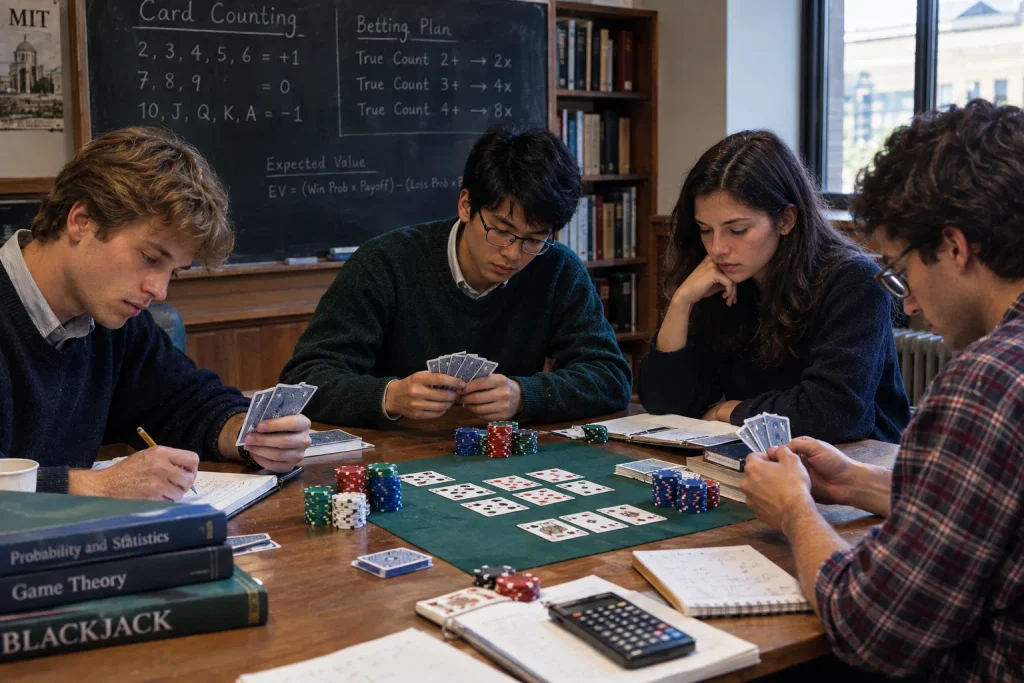
The MIT Blackjack Team was not a single permanent group of students operating continuously under one organisation. It evolved through different partnerships and generations of players from the late 1970s through the 1990s.
One of the most important figures was Bill Kaplan, a Harvard graduate who had already run a successful blackjack team before joining the MIT group. In 1980, Kaplan worked with J.P. Massar and others to reorganise the operation as a disciplined business.
The new team began on 1 August 1980 with $89,000 of capital. Ten players participated initially, with investors and players sharing the financial results. Within ten weeks, the bankroll had more than doubled. Contemporary accounts put actual table profits at approximately $162.50 per hour, compared with a projected $170 per hour.
That early performance illustrates an important point: the MIT operation was not simply a group of students casually counting cards. It developed systems for training, bankroll management, player selection, record-keeping, and casino play.
What they achieved, and the way they went about it, will forever place them amongst the most famous gambling legends in Las Vegas history.
How Much Money Did the MIT Blackjack Team Make?
There is no definitive public ledger showing the total amount won by every incarnation of the MIT Blackjack Team.
One of the strongest published figures comes from professional blackjack player Andy Bloch, who spent six years associated with the team. In a 2008 interview with the Las Vegas Review-Journal, Bloch described $10 million as a conservative estimate of the team’s winnings. He also explained that the organisation changed considerably over time, with players joining and leaving different teams.
That makes $10 million a useful reported benchmark, but it should not be treated as an audited lifetime total.
The broader history also included later partnerships and successor teams. A U.S. federal court document discussing the MIT Blackjack Team’s history states that at least 22 partnerships operated between late 1979 and 1989, involving at least 70 people in various roles. It says every partnership was profitable after expenses and the players’ and managers’ shares, with investor returns ranging from 4% annually to more than 300% annually.
Consequently, claims that the team made “tens of millions” should be treated cautiously unless they specify which players, partnerships, and years they cover.
How Much Did Individual MIT Blackjack Players Make?
Individual earnings varied enormously.
Players were not simply paid an equal share of the team’s profits. The original structure divided money between investors and players, with player compensation related to playing time and performance. During the first ten-week operation, players reportedly earned more than $80 per hour on average, while investors achieved an annualised return exceeding 250%.
Later, players could make considerably more.
Jeff Ma, one of the players whose experiences helped inspire Bringing Down the House and the film 21, has discussed the team’s results publicly. In 2024, Ma recalled that the team’s biggest weekend produced more than $500,000 in winnings, although he also remembered a losing weekend involving a loss of several hundred thousand dollars.
Another important example is Semyon Dukach, who joined the MIT blackjack operation and later became a team leader. Forbes reported that after approximately four years of professional blackjack, Dukach left the tables with less than $1 million personally.
Dukach subsequently described the experience as involving teams that won millions of dollars, although his own personal earnings were substantially different from the total amount generated by the teams.
These examples demonstrate why MIT Blackjack Team winnings and individual MIT blackjack player earnings should not be treated as interchangeable figures.
Why Did the MIT Blackjack Team Make Money?
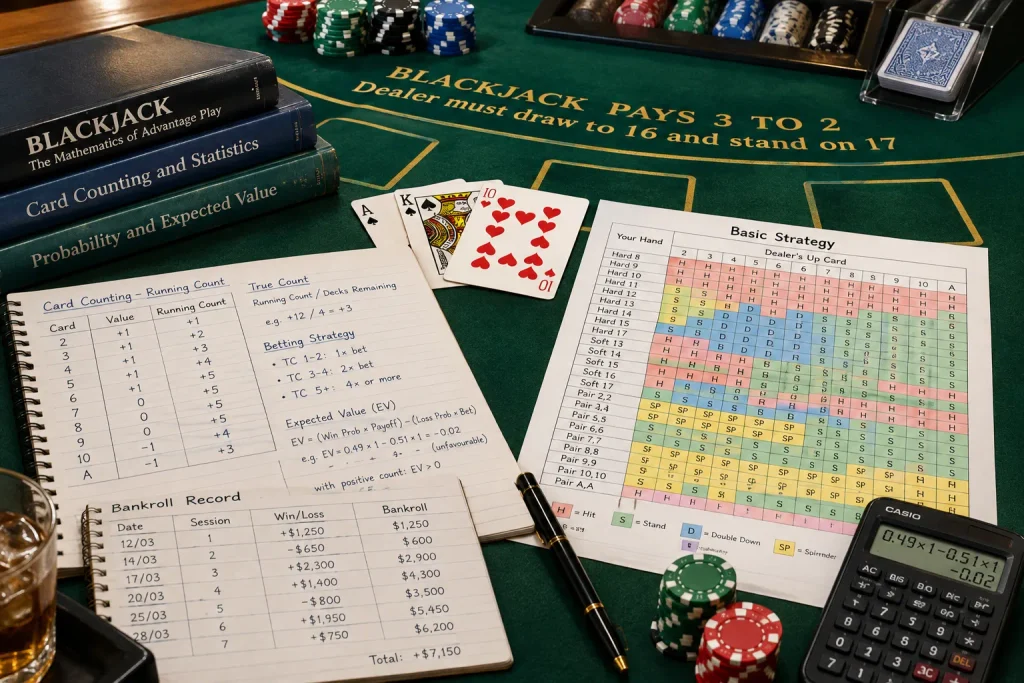
The core idea was mathematical.
Card counting does not mean predicting the next card. Instead, a trained player tracks the changing composition of cards remaining in the shoe. When the remaining cards become relatively favourable to the player, the team’s betting strategy can increase its exposure.
The MIT approach added a business structure around that mathematical advantage.
A spotter could play relatively small bets while monitoring the count. When conditions became favourable, another player, the so-called big player, could enter with substantially larger wagers.
The system therefore attempted to separate card counting from conspicuous betting behaviour. The team’s players also trained extensively and recorded their casino sessions.
Wired’s 2002 account described the operation as an organised mathematical exercise involving expected advantages, player roles, betting systems and extensive simulated play.

Could an MIT-Style Blackjack Team Succeed in 2026?
The mathematics of card counting have not disappeared, but the casino environment has changed dramatically.
Modern casinos have extensive surveillance and sophisticated methods for identifying advantage players. Countermeasures can include increased shuffling, reduced penetration, restrictions on betting patterns, and removing players from blackjack games.
Continuous shuffling machines create another major obstacle because cards are repeatedly returned to the machine rather than remaining in a shoe whose composition can be tracked.
There is also a legal distinction between card counting and cheating. Nevada law, for example, prohibits cheating and the use of electronic or mechanical devices designed to obtain an advantage, including devices that track cards or analyse probabilities.
In practical terms, a modern team would therefore face a much more difficult operating environment than Kaplan’s players encountered in the 1980s.
That does not mean a mathematical blackjack team is impossible in 2026. It means that the historical model cannot simply be copied. A team would need favourable game rules, disciplined bankroll management, highly trained players, and sufficient opportunities to play before casinos identified and restricted them.
The biggest difference is that the edge was never guaranteed. Even the MIT team experienced substantial losing sessions. A positive expected value over a large sample does not prevent short-term losses.
The Legacy of the MIT Blackjack Team
The significance of the MIT Blackjack Team extends beyond the money.
The group demonstrated how mathematical analysis could be combined with team organisation, probability, bankroll management and behavioural strategy to approach casino gambling as a business operation.
Its story subsequently became the subject of Ben Mezrich’s Bringing Down the House and inspired the 2008 film 21. Those adaptations dramatised the story, but the underlying historical operation was real.
After initially learning how to play blackjack, the team went on to generate millions of dollars. However, the frequently cited $10 million figure should be understood as a reported estimate rather than an audited lifetime total.
Conclusion
So, how much money did the MIT Blackjack Team make? The best-supported public figures point to millions of dollars, with Andy Bloch describing approximately $10 million as a conservative estimate for the team’s winnings.
Individual players earned very different amounts. A similar team could theoretically exploit favourable blackjack mathematics in 2026, but modern casino surveillance, shuffling technology, and countermeasures make reproducing the historic MIT model substantially more difficult.
Whichever way you look at it, the creation, operation, and methods of the MIT Blackjack Team mark them down (in all of their iterations) as amongst the greatest gamblers in history.
Card Counting
Card Counting
5
5
0
1
A Practical Beginner’s Guide to Beating Blackjack With Math, Memory, and Discipline. Audiobook: Jonathan Keane (Author), Jonathan Keane (Read by)
A Practical Beginner’s Guide to Beating Blackjack With Math, Memory, and Discipline. Audiobook: Jonathan Keane (Author), Jonathan Keane (Read by)
5/5
Total Score
iBookshop.org audiobook subscriptions are just £12.99/month!
Amazing
Frequently Asked Questions
How much money did the MIT Blackjack Team make?
A definitive lifetime total is not publicly established. Former team member Andy Bloch described $10 million as a conservative estimate of the team’s winnings. Because the MIT operation consisted of multiple partnerships and generations of players, different totals can refer to different periods.
How much did the MIT Blackjack Team win in its first operation?
The 1980 team began with $89,000 and more than doubled its original stake within ten weeks. Reported table profits averaged approximately $162.50 per hour during that initial period.
How much money did individual MIT Blackjack Team members make?
Individual earnings varied according to role, playing time, and partnership. Semyon Dukach, for example, told Forbes that he left professional blackjack with less than $1 million personally, despite being involved with teams that won millions.
Did Jeff Ma make millions from blackjack?
Jeff Ma was a member of a later generation of the MIT Blackjack Team. He has publicly discussed substantial team winnings, including a weekend when the group won more than $500,000. Individual earnings should not be confused with the team’s gross winnings.
Who was Bill Kaplan?
Bill Kaplan was a Harvard graduate who became one of the key managers of the MIT Blackjack Team. He introduced formal training, player selection, record-keeping, and a standardised blackjack system, helping transform the operation into a structured business.
Did the MIT Blackjack Team really count cards?
Yes. Card counting was central to the team’s approach. Players tracked the changing composition of cards in blackjack shoes and used that information to determine when conditions were more favourable. The operation also used different team roles to manage betting and reduce detection.
Is card counting still possible in 2026?
Card counting remains mathematically possible under suitable blackjack conditions, but modern casino countermeasures can make it considerably more difficult to obtain and maintain an advantage. Continuous shuffling machines are particularly problematic because they disrupt the shoe composition that counters attempt to track.
Could a new MIT-style blackjack team make money in 2026?
A team could theoretically obtain positive expected value in suitable games, but reproducing the historical MIT model would be considerably more difficult. Casino surveillance, game changes, shuffling technology and restrictions on advantage players create significant practical obstacles.
Is card counting illegal?
Card counting with one’s own mental calculations is distinct from cheating, although the rules and legal position vary by jurisdiction. Nevada law specifically prohibits cheating and certain electronic or mechanical devices designed to obtain an advantage.
How long did the MIT Blackjack Team operate?
The MIT operation developed through several partnerships beginning in the late 1970s. A federal court account records numerous partnerships through the 1980s and successor teams into the 1990s, with the broader MIT blackjack-team era winding down around 2000.
Reference List:
Bloch, A. (2008, May 8). Las Vegas part of team featured in new movie. Las Vegas Review-Journal. Las Vegas Review-Journal article
Buchanan, L. (2008, August 1). Luck is for losers. Inc. Magazine. Inc. Magazine article
Dukach, S. (2024). Blackjack and venture capital. LinkedIn. Semyon Dukach’s account
Forbes. (2014, August 14). From cardshark to angel: Semyon Dukach. Forbes. Forbes profile of Semyon Dukach
Ma, J. (2024, November 7). Troon Golf’s Jeff Ma and the true story of MIT’s blackjack team. GOLF.com. GOLF.com interview
Mezrich, B. (2002, September 1). Hacking Las Vegas. WIRED. WIRED article
Nevada Legislature. (2026). NRS Chapter 465: Crimes and liabilities concerning gaming. Nevada Revised Statutes Chapter 465
Nevada Legislature. (2026). NRS Chapter 463: Licensing and control of gaming. Nevada Revised Statutes Chapter 463
United States Court of Appeals for the Ninth Circuit. (2013). Tsao v. Desert Palace, Inc. [Court document]. Federal court document discussing the MIT Blackjack Team’s history


Sign Up for Our Newsletters
Be the first to know when new content is created.Related Posts

A Child’s Role in Illegal Gambling in Birmingham
This is the story of illegal gambling in Birmingham between the wars (1920-1930), told through the eyes of George, a ten‑year‑old bookie’s runner. In a city scarred by poverty, Birmingham street kids became the lifeblood of Birmingham criminal gangs, darting through alleys and canals to keep bets flowing.

Illegal Gambling Gangs in the Midlands (1890–1930)
Illegal gambling in Birmingham between 1890 and 1930 thrived in back‑street pubs, industrial slums, and racecourse networks controlled by gangs like the Peaky Blinders and the Birmingham Boys. Despite strict laws, betting, pitch‑and‑toss, and off‑track bookmaking flourished, shaping the city’s criminal underworld and police responses.

Eddie Fewtrell King of Clubs – Birmingham’s Nightlife Pioneer
Eddie Fewtrell, known across the Midlands as the King of Clubs, built one of Birmingham’s most influential nightlife empires. His story blends ambition, underworld connections, illegal gambling, and a legendary confrontation with the Kray twins. This essay explores how Eddie Fewtrell rose from humble beginnings to become a defining figure in Birmingham’s clubland history.

What Does a Casino Roulette Dealer Do?
Roulette is one of the most iconic and popular games found in casinos worldwide. The allure of the spinning wheel, the clinking of chips, and the suspenseful ball drop are elements that captivate players and onlookers alike. At the heart of this game lies the casino roulette dealer, also known as the croupier. The dealer's role is multifaceted, requiring a combination of mathematical skills, keen observation, and exceptional customer service. This essay delves into the various responsibilities and tasks performed by a casino roulette dealer, exploring the intricacies of their work, the skills required, and the nuances of the game they manage.