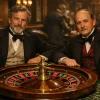
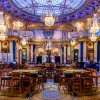
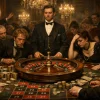
A Deep Dive into the Secrets, Legends, and Legacy of London’s Most Exclusive Casino.
Gods of GamblingLegendary figures who made millions
10 Things You Didn’t Know About Crockford’s Casino Mayfair


Crockford’s Casino Mayfair, on Curzon Street, wasn’t just another gaming venue. It was a 195-year institution shaped by aristocrats, high rollers, and the visionary William Crockford, leaving an unmatched legacy in the history of London’s casinos.
1. Crockford’s Casino Mayfair Was Founded by a Fishmonger Turned Gambling Kingpin
William Crockford’s rise is one of the most remarkable stories in British social history. Born into a humble fishmonger family near Temple Bar, he used sharp mathematical instincts and mastery of Regency gambling games to build a fortune. By the 1820s, he had transformed himself into London’s most influential gaming entrepreneur. His original St James’s club became a magnet for aristocrats, diplomats, and royalty. Crockford’s Casino would eventually evolve into the legendary Curzon Street venue, but its DNA exclusivity, luxury, and high‑stakes gaming was forged by a man who began life gutting fish on Fleet Street.

2. The Original Club Employed a Celebrity Chef on a Royal Salary
Long before the Curzon Street casino era, the first Crockford’s set new standards for luxury. William Crockford hired Louis Eustache Ude, former chef to Louis XVIII of France, paying him an astonishing £4,000 per year, more than many dukes earned. This investment wasn’t about food; it was a strategy. Crockford understood that elite gamblers expected elite hospitality. Free gourmet dining became a hallmark of the club, reinforcing its reputation as the most opulent gaming house in London. This early fusion of fine dining and high‑stakes gaming helped define the luxury casino model still used worldwide.
3. Members Ate for Free – But Paid at the Tables
Crockford’s Casino on Curzon Street perfected the art of hospitality economics. Members enjoyed lavish meals, premium wines, and impeccable service at no charge, creating an atmosphere of effortless indulgence. But the real revenue came from the gaming floor. Regency games like hazard and whist delivered a reliable house edge, ensuring Crockford profited handsomely from every evening of play. This model, luxury perks subsidised by gaming losses, became the blueprint for modern VIP casino operations. Even in the Curzon Street era, Crockford’s maintained this philosophy: treat high‑rollers like royalty, and the tables will take care of the rest.
4. The Duke of Wellington Joined Crockford’s Casino Mayfair to Keep His Son Out
One of the most enduring legends in Crockford’s history involves the Duke of Wellington. According to contemporary accounts, he joined the original club not to gamble, but to prevent his son from being tempted by its allure.

This anecdote reveals the paradox of elite gambling culture: Crockford’s was irresistible to the aristocracy, yet feared for its ability to drain fortunes. The story also highlights the club’s extraordinary social pull. Even those who disapproved of gambling felt compelled to join simply to maintain influence. Crockford’s Casino was more than a venue; it was a social force.
5. William Crockford Amassed a Fortune Worth Tens of Millions Today
By the time he retired in 1840, William Crockford had accumulated more than £1 million, a staggering sum in the 19th century, equivalent to tens of millions today. His wealth came not from luck, but from a meticulously engineered gaming ecosystem that attracted Europe’s wealthiest players.
Crockford withdrew his fortune and invested in property and business ventures, though not all proved successful. Still, his financial legacy remains extraordinary. Few entrepreneurs in British history have risen so far, so fast. Crockford’s Casino stands as a testament to his ambition, strategy, and understanding of elite gambling psychology.
6. The Curzon Street Casino Was the Third Major Incarnation
Many visitors assumed the Curzon Street Crockford’s was the original, but it was actually the third major version of the club. The first opened in 1828 on St James’s Street. The second emerged in the 1920s as a fashionable bridge club. Only in 1983 did the brand move to 30 Curzon Street, where it became one of London’s most exclusive casinos.
Each incarnation reflected its era: Regency opulence, interwar social gaming, and modern high‑roller luxury. Yet all shared the same core identity: discretion, exclusivity, and a clientele drawn from the global elite.
7. Crockford’s Was Invitation‑Only – Even for Billionaires
Unlike most London casinos, Crockford’s operated as a private members’ club. Entry required sponsorship, vetting, and approval, ensuring only the most trusted and affluent individuals gained access. This exclusivity became a central part of its brand identity. Even billionaires could be declined if they didn’t meet the club’s standards of discretion and decorum.
Inside, the atmosphere was refined, quiet, and intensely private, qualities that attracted royalty, business magnates, and international VIPs. Crockford’s Casino wasn’t just a place to gamble; it was a sanctuary for those who valued privacy as much as luxury.
8. The Crockfords’ Name Became a Global Luxury Symbol Without Expanding
Remarkably, Crockford’s never opened branches in other cities, yet its name became internationally recognised. Casinos in Las Vegas, Macau, and Southeast Asia referenced the Crockfords brand in marketing, associating it with elite gaming and British sophistication.
This global prestige stemmed from nearly two centuries of building a reputation. The Curzon Street casino, owned by Genting Group in its later years, further amplified the brand’s reach. Crockford’s became shorthand for exclusivity, discretion, and high‑roller culture, an extraordinary achievement for a single-location London casino.
9. Crockford’s Casino Mayfair Survived Wars, Recessions, and Social Upheaval
Few institutions in London’s nightlife history have endured as much change as Crockford’s. Across nearly 200 years, it survived world wars, economic depressions, shifting gambling laws, and dramatic cultural transformations. Its ability to reinvent itself, first as a Regency club, then as a bridge society, and finally as a modern VIP casino, was key to its longevity. Even as competitors rose and fell, Crockford’s maintained its aura of prestige. Its closure in 2023 marked not just the end of a casino, but the end of an era in Mayfair’s elite gaming culture.
10. The 2023 Closure Marked the End of London’s High‑Roller Golden Age
When Genting closed Crockford’s Casino in October 2023, it signalled the collapse of London’s traditional high‑roller ecosystem. The Ritz Club had already closed in 2020, and The Clermont in 2018. A combination of regulatory tightening, reduced luxury tourism, and global competition from Macau and Singapore reshaped the industry. Crockford’s departure left a void in Mayfair’s casino landscape. For many, it symbolised the end of London’s old‑world gambling aristocracy, a world defined by tuxedos, baccarat, and whispered conversations in private salons.
Conclusion
Crockford’s Casino Mayfair was more than a gaming venue; it was a cultural landmark that shaped nearly two centuries of elite gambling in London. From William Crockford’s Regency empire to the Curzon Street icon, its legacy endures in global casino culture, luxury hospitality, and the mythology of high‑roller exclusivity.
5 FAQs About Crockford’s Casino Mayfair (That Most People Don’t Know)
❓ Was the modern Crockford’s really inspired by an older club?
Yes. It was a revival of William Crockford’s 1828 Regency gambling club, once the most elite gaming house in London.
❓ Was Crockford’s membership open to anyone who applied?
No. Applicants underwent discreet vetting, and acceptance often required an existing member’s endorsement.
❓ Did the casino use traditional games from the original club?
Some heritage games survived, especially high‑stakes baccarat, offered in private salons.
❓ Were there areas of Crockford’s casino Mayfair the public never saw?
Yes. Crockford’s contained invitation‑only gaming rooms and private dining spaces reserved for VIPs.
❓ Did Crockford’s ever have royal or political visitors?
Historical accounts link the original club to aristocrats and royals, though the modern casino keeps such visits confidential.


New Casinos

100% up to £50 + 25 free spins

100 spins plus up to £200 bonus

100 spins plus up to £200 bonus

100% match bonus up to £100

Win up to 500 free spins on Starburst

Double deposit bonus up to £350