The Gambler is one of Fyodor Dostoevsky’s most revealing works, an electrifying blend of autobiography, psychological insight, and social satire. Written under extreme financial pressure and shaped by his own addiction to roulette, the novel offers a raw, intimate look at compulsion, love, and self‑destruction. This review of The Gambler explores its themes, characters, and lasting cultural impact.

Dostoevsky, Debt, and the Birth of The Gambler
To understand The Gambler by Fyodor Dostoevsky, you must understand the man who wrote it, and the circumstances that forced it into existence. In 1866, Dostoevsky was drowning in debt. Years of gambling losses, predatory loans, and poor publishing contracts had left him financially cornered. His addiction to roulette was no secret; he wrote letters describing the “demonic thrill” of the wheel and the crushing despair of losing everything.
At this moment of crisis, publisher Stellovsky offered him a brutal contract: deliver a new novel within 30 days or lose the rights to all his future works. It was a trap designed to exploit Dostoevsky’s desperation.
To meet the impossible deadline, he hired a young stenographer, Anna Snitkina. Together, they worked day and night, with Dostoevsky dictating at a frantic pace. They finished the manuscript just hours before the deadline. Anna later became his wife, and their marriage helped stabilize his life.
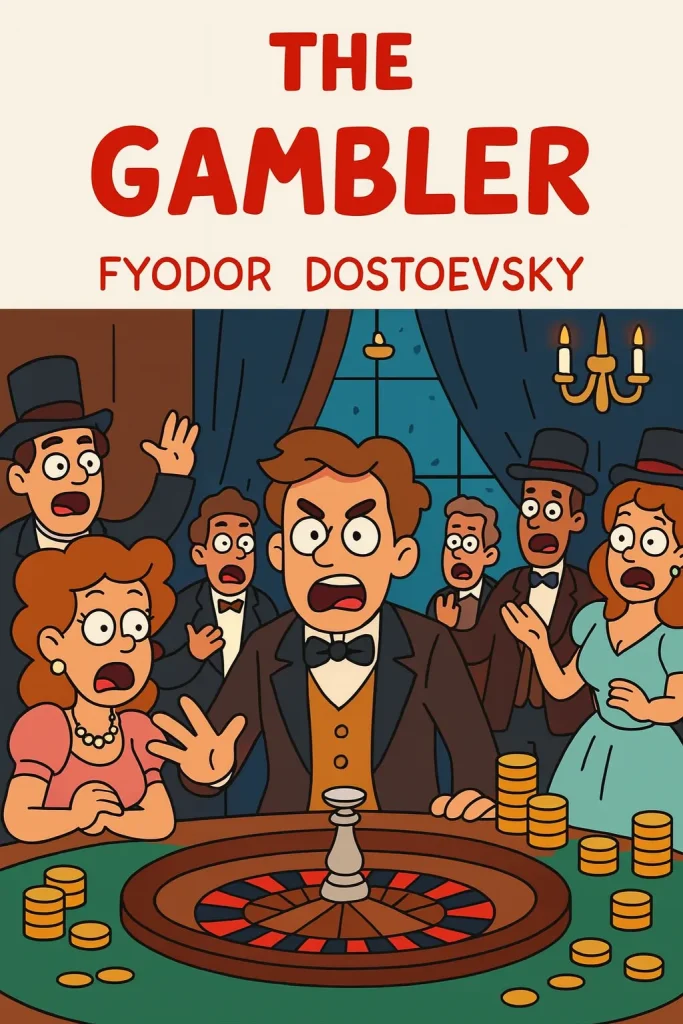
Autobiographical Foundations
The Gambler is not merely inspired by Dostoevsky’s addiction; it is a direct reflection of it. The protagonist, Alexei Ivanovich, mirrors Dostoevsky’s emotional volatility, compulsive gambling, and self‑destructive tendencies. The novel’s setting, characters, and psychological tension all draw from Dostoevsky’s experiences in European casinos.
Historical Context
In the mid-19th century, European spa towns such as Baden-Baden and Wiesbaden were renowned for their gambling hotspots. Russian aristocrats flocked there to escape social constraints and indulge in risk. Dostoevsky observed this world first-hand, and The Gambler captures its glamour, desperation, and moral ambiguity with remarkable accuracy.
Plot Overview (Spoiler)
Setting and Premise
The novel takes place in the fictional spa town of Roulettenburg, a thinly veiled version of the European casino resorts to which Dostoevsky frequently travelled. The story revolves around a Russian family abroad, the General, his stepdaughter Polina, and their entourage, who are all entangled in financial and emotional turmoil.
Alexei Ivanovich as Narrator
Alexei, the family’s tutor, narrates the story with a mix of intensity, vulnerability, and unreliability. He is deeply in love with Polina, whose emotional manipulation fuels his descent into gambling.
Key Plot Movements
- The General is financially ruined and anxiously awaiting news of his wealthy aunt’s death.
- Polina tests Alexei’s devotion, pushing him toward reckless behaviour.
- Granny unexpectedly arrives—alive, wealthy, and eager to gamble.
- Alexei wins a fortune at roulette, only to lose everything again.
Themes Introduced Through Plot
The plot serves as a vehicle for exploring obsession, humiliation, power dynamics, and the psychological grip of gambling.
Character Analysis
Alexei Ivanovich
Alexei is one of Dostoevsky’s most psychologically complex narrators. His addiction is not just financial; it is emotional. He gambles to prove himself, to escape humiliation, and to win Polina’s approval. His narration is raw, confessional, and often unreliable, pulling readers into the chaotic logic of addiction.
Polina Alexandrovna
Polina is enigmatic, proud, and emotionally conflicted. She manipulates Alexei, yet she is also trapped by her own circumstances. Her relationship with Alexei is a study in power, dependency, and emotional cruelty.
The General
The General represents the decaying Russian aristocracy, obsessed with status, terrified of financial ruin, and easily manipulated by foreign opportunists.
Granny
Granny is a brilliant narrative disruptor. Her arrival overturns everyone’s plans. She gambles with fearless abandon, embodying both the thrill and absurdity of roulette.
Supporting Characters
Figures like Mr Astley and De Grieux highlight the social hierarchies and cultural tensions of Russians abroad.
Major Themes in The Gambler
Gambling Addiction and Compulsion
Dostoevsky’s personal experience with roulette gives the novel exceptional psychological realism. Through Alexei, he portrays addiction as a cycle of emotional captivity rather than glamour. Key elements include:
The Emotional Mechanics of Addiction
- The intoxicating rush of early wins
- The false belief in “systems” and strategies
- The shame and self‑loathing that follow losses
- The relentless swing between hope and despair
Alexei’s compulsion is depicted as a prison, one he cannot escape, even when he recognises its destructive power.
Power, Money, and Social Status
The casino functions as a microcosm of society. Characters use wealth to manipulate, dominate, and humiliate one another. Money becomes both a weapon and a trap, shaping relationships and social hierarchies.
Love, Obsession, and Emotional Dependency
Alexei’s fixation on Polina mirrors his roulette fixation. Both are unpredictable, intoxicating, and ultimately ruinous. Dostoevsky draws a parallel between romantic obsession and addictive behaviour, showing how both can consume a person’s identity.
Fate vs. Free Will
Roulette becomes a philosophical symbol. The spinning wheel reflects the tension between destiny and choice, raising questions about whether human beings control their lives or are governed by forces beyond their understanding.
Literary Style and Narrative Technique
First‑Person Confessional Voice
The novel’s intensity comes from Alexei’s urgent, emotional narration. His voice is chaotic, intimate, and unfiltered, pulling readers directly into his psychological turmoil.
Pacing and Structure
Written under a 30‑day deadline, the novel moves quickly and unpredictably. The rapid shifts in scene and emotion mirror the instability of addiction itself.
Satire and Social Commentary
Dostoevsky satirises:
- European aristocracy
- Russian social pretensions
- The absurd rituals of gambling culture
Psychological Realism
The Gambler stands as an early and influential work of addiction literature. Its insights into compulsive behaviour feel strikingly modern.
The Gambler in Dostoevsky’s Body of Work
Comparisons to Other Novels
Like Crime and Punishment, The Idiot, and Notes from Underground, the novel explores compulsion, morality, and emotional suffering. However, The Gambler is shorter, sharper, and more overtly autobiographical.
A Transitional Work
This novel marks a turning point in Dostoevsky’s career. It helped him escape financial disaster and set the stage for the masterpieces that followed.
Cultural Impact and Modern Relevance
Influence on Gambling Literature and Psychology
The novel is frequently cited in academic studies of addiction. Its portrayal of compulsive gambling remains one of the most accurate in literary history.
Adaptations
The Gambler has inspired:
- Films
- Operas
- Stage productions
Each adaptation interprets the novel’s psychological tension in its own way.
Why It Still Resonates
Themes of risk, desire, and emotional dependency remain timeless. Modern readers recognise the same patterns in today’s gambling culture, from casinos to online betting platforms.
Strengths And Weaknesses of The Gambler by Fyodor Dostoevsky
Strengths
- Raw psychological honesty
- Memorable, vivid characters
- Sharp social satire
- Strong autobiographical foundation
Weaknesses
- Abrupt pacing
- Emotional intensity that may overwhelm some readers
- Chaotic narration due to Alexei’s unstable mindset
Who Will Enjoy This Book?
- Readers of psychological fiction
- Anyone interested in addiction narratives
- Students of Russian literature
- Those fascinated by the intersection of art and personal struggle
Conclusion
The Gambler by Fyodor Dostoevsky is more than a novel, it is a confession, a psychological study, and a cultural artifact. Dostoevsky transformed his darkest impulses into a work of enduring power, capturing the emotional truth of addiction with unmatched clarity. The novel’s characters, themes, and autobiographical roots make it one of the most compelling explorations of risk and desire in world literature. Whether you read it for its psychological depth, its historical context, or its literary brilliance, The Gambler remains a gripping, relevant, and unforgettable work that continues to resonate with modern readers.
Frequently Asked Questions
❓ What is The Gambler about? It follows Alexei Ivanovich, a tutor consumed by love and roulette, exploring addiction, obsession, and self‑destruction.
❓ Is The Gambler based on Dostoevsky’s real life? Yes. The novel mirrors Dostoevsky’s own gambling addiction and financial struggles.
❓ What themes does The Gambler explore? Major themes include addiction, power, humiliation, love, obsession, and fate.
❓ Why did Dostoevsky write The Gambler so quickly? He had 30 days to deliver the novel or lose the rights to all his future works.
❓ Is The Gambler worth reading today? Absolutely. Its psychological insight and cultural relevance make it timeless.