


Dark
Light
Leonardo Pisano, better known as Fibonacci, remains one of the most influential mathematicians of the Middle Ages. His work introduced Europe to the Hindu‑Arabic numeral system and gave rise to the famous Fibonacci sequence, a pattern that continues to fascinate mathematicians, scientists, and even gamblers. From his early childhood in Pisa to his career as a merchant’s son traveling across the Mediterranean, Fibonacci’s discoveries shaped the way numbers are understood today. This article answers the question “who is Fibonacci and what did he do?” and explores his career, the origins of the sequence, and its surprising relevance to gambling strategies.
To answer the question, “Who is Fibonacci and what did he do?” we need to begin at the beginning.
Fibonacci Early Life & Childhood
Leonardo Pisano was born around 1170 in Pisa, Italy, a city known for trade and maritime power. His father, Guglielmo Bonacci, worked as a merchant and customs officer in North Africa. It was through these travels that young Leonardo was exposed to mathematics beyond the limited Roman numeral system used in Europe.
While Europe relied on cumbersome Roman numerals, merchants in North Africa and the Arab world used the Hindu-Arabic numeral system, which enabled efficient calculation. Leonardo studied under Arab mathematicians in Bugia (modern‑day Béjaïa, Algeria), where he learned advanced arithmetic and algebra. This early exposure shaped his intellectual curiosity and gave him tools that would later revolutionize European mathematics.
By the time he returned to Pisa, Leonardo had already developed a reputation for his mathematical skill. His early childhood experiences highlight the importance of cultural exchange in shaping intellectual history. The biography of Leonardo Pisano is not just about one man’s genius but also about the blending of Eastern and Western knowledge during the medieval period.
Fibonacci Career & Travels
Leonardo Pisano’s career was deeply tied to his father’s trade missions. Traveling across the Mediterranean, he encountered scholars in Egypt, Syria, Greece, and Sicily. These journeys exposed him to diverse mathematical traditions, including algebraic methods and geometric theories.
In 1202, Fibonacci published his most famous work, Liber Abaci (“The Book of Calculation”). This text introduced the Hindu‑Arabic numeral system to Europe, explaining its superiority over Roman numerals. Merchants could now calculate profits, interest, and conversions with unprecedented ease. Liber Abaci also included practical examples, such as currency exchange and profit margins, making it accessible to traders and bankers.
His career was not limited to writing. Fibonacci corresponded with scholars and rulers, including Holy Roman Emperor Frederick II, who recognized his brilliance. His contributions extended to number theory, ratios, and problem‑solving techniques.
The biography of Leonardo Pisano demonstrates how his career bridged cultures and transformed European mathematics. His travels were not just physical journeys but intellectual ones, bringing knowledge from the Arab world into the heart of Europe.

Creation of the Fibonacci Sequence
The Fibonacci sequence first appeared in Liber Abaci as part of a problem about rabbit population growth. The problem asked: if a pair of rabbits reproduces monthly, how many pairs will exist after a year? The solution produced the sequence: 1, 1, 2, 3, 5, 8, 13, and so on, where each number is the sum of the two preceding ones.
If by chance I have omitted anything more or less proper or necessary, I beg forgiveness, since there is no one who is without fault and circumspect in all matters.
This simple recursive formula reveals profound mathematical properties. The sequence grows exponentially, and the ratio between successive numbers approaches the golden ratio (1.618…), a number associated with harmony and proportion.
The Fibonacci sequence in nature is one of its most fascinating aspects. It appears in sunflower seed arrangements, pinecones, nautilus shells, and even the branching of trees. These natural patterns follow the sequence because they optimize growth and efficiency.
Beyond biology, the sequence has applications in architecture, art, and finance. Traders use Fibonacci retracement levels to predict market movements, while artists employ golden ratio proportions for aesthetic balance.
The creation of the sequence was not intended as a mystical discovery but as a practical solution to a problem. Yet its implications have transcended centuries, making it one of the most famous mathematical patterns in history.
Influence on Mathematics & The Fibonacci Legacy
Fibonacci’s influence extended far beyond his sequence. His introduction of Hindu‑Arabic numerals transformed European commerce, science, and education. Calculations that once required complex Roman numeral manipulations became straightforward.
The Man of Numbers
The Man of Numbers
5
5
0
1
Fibonacci’s Arithmetic Revolution
The young Italian, Leonardo of Pisa (better known today as Fibonacci), learned the Hindu number system while travelling to North Africa with his father, a customs agent. The book he created was Liber abbaci, the ‘Book of Calculation’, and the revolution that followed its publication was enormous.
5/5
Total Score
iAlso available as an Ebook £10.39
Amazing
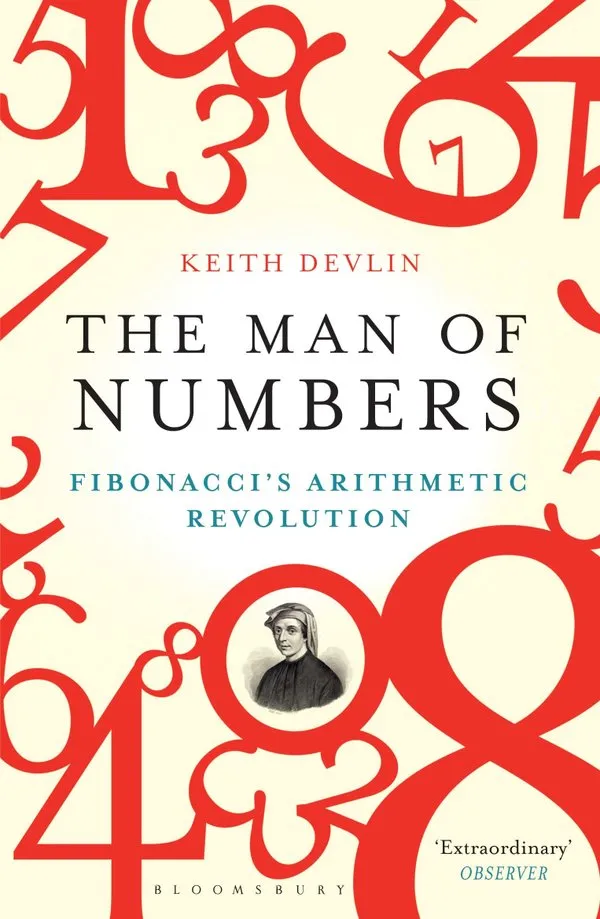
His recognition by Emperor Frederick II highlights his status as a leading intellectual of his time. Later mathematicians built upon his work, integrating his ideas into algebra, geometry, and number theory.
The biography of Leonardo Pisano is a testament to how one individual can reshape intellectual history. His legacy is not just the sequence but the widespread adoption of a numerical system that remains the foundation of modern mathematics.
Today, Fibonacci is celebrated in textbooks, research, and popular culture. His name is synonymous with mathematical beauty, and his sequence continues to inspire curiosity across disciplines.
Fibonacci Sequence & Gambling
One of the most unexpected applications of Fibonacci’s work is in gambling. The Fibonacci betting system is a strategy based on the sequence. It is commonly used in roulette and sports betting.
The system works by increasing bets according to the sequence after a loss. For example, if a gambler loses a $1 bet, the next bet is $1, then $2, then $3, and so on. After a win, the bettor moves back two steps in the sequence. The idea is to recover losses gradually, without the extreme risk associated with systems like Martingale, which doubles bets after each loss.
While the Fibonacci gambling system appeals to players because of its mathematical elegance, it is not foolproof. Casinos are designed to maintain a house edge, and no betting system can overcome this in the long run. However, the system demonstrates how mathematical patterns can influence human behavior, even in games of chance.
The fascination with applying the Fibonacci sequence in gambling reflects a broader human desire to find order in seemingly random events. Though Fibonacci himself never gambled, his sequence has become a cornerstone of betting strategies worldwide.
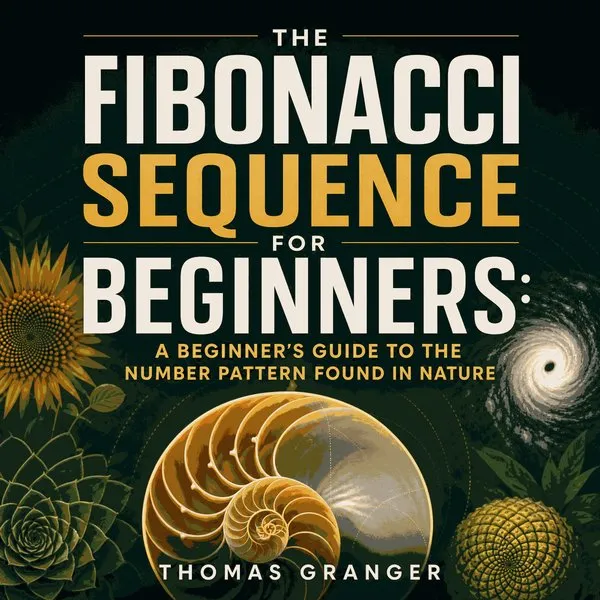
Fibonacci Sequence for Beginners
Fibonacci Sequence for Beginners
5
5
0
1
A Beginner’s Guide to the Number Pattern Found in Nature. Audiobook: Thomas Granger (Author), Thomas Granger (Read by)
A Beginner’s Guide to the Number Pattern Found in Nature. Audiobook: Thomas Granger (Author), Thomas Granger (Read by)
5/5
Total Score
iBookshop.org audiobook subscriptions are just £12.99/month!
Amazing
Did Fibonacci Gamble?
There is no historical evidence that Fibonacci gambled. His work focused on mathematics, trade, and problem‑solving. The association between Fibonacci and gambling is a modern invention, born from the application of his sequence to betting systems.
The biography of Leonardo Pisano reveals a man dedicated to intellectual pursuits, rather than games of chance. His sequence was created to solve a mathematical problem, not to predict the outcomes of a roulette game.
Nevertheless, the fact that the Fibonacci betting system remains in use today highlights the enduring relevance of his work. Even though he did not gamble, his ideas continue to shape strategies in casinos and beyond.
Who Is Fibonacci And What Did He Do? My Conclusion
Leonardo Pisano, or Fibonacci, transformed mathematics by introducing Hindu‑Arabic numerals and creating the famous sequence. His legacy extends from medieval trade to modern science, finance, and even gambling strategies.
The Fibonacci sequence in nature demonstrates its universal appeal, while the Fibonacci gambling system shows its cultural reach. Though Fibonacci himself did not gamble, his work continues to inspire curiosity and innovation. The Leonardo Pisano biography is a story of intellectual exchange, resilience, and timeless influence
Frequently Asked Questions
Why is Fibonacci important today?
His work laid the foundation for modern arithmetic, algebra, and applied mathematics.
What does the name Fibonacci mean?
It derives from filius Bonacci, meaning “son of Bonacci.”
What is Fibonacci best known for besides the sequence?
He introduced Hindu-Arabic numerals to Europe through his book Liber Abaci.
Is the Fibonacci sequence found in nature?
Yes, in patterns like sunflower seeds, pinecones, and shells.
How is the Fibonacci sequence used in finance?
Traders use Fibonacci retracement levels to predict market movements.


Sign Up for Our Newsletters
Be the first to know when new content is created.Related Posts

Bill Kaplan Net Worth: MIT Blackjack Team, Gambling Career, and Life Story
Bill Kaplan is best known as the Harvard graduate who transformed the MIT Blackjack Team into a highly organised gambling enterprise. His blackjack ventures reportedly generated more than $10 million in winnings, while his later real-estate and technology businesses became important parts of his career. There is, however, no authoritative public figure for Bill Kaplan net worth.

Who Is Andreas Bierwirth? Casinos Austria’s Next CEO
Andreas Bierwirth’s Casinos Austria appointment puts an experienced aviation, telecommunications and banking executive at the centre of Austrian gambling’s next chapter. Scheduled to become chief executive in March 2027, he faces a demanding combination of concession renewals, digital transformation and proposed reforms that could reshape competition across the national market.

The Life & Death of Moe Greene
This essay explores the fictional life story of Mo Greene, a character from Mario Puzo’s The Godfather. Although Greene never existed in real life, his rise, influence, and violent downfall form a crucial part of the film’s mythology surrounding Las Vegas, organized crime, and the evolution of American gambling entertainment.

What Does an Anti Money Laundering Reporting Officer Do?
An anti money laundering reporting officer (AMLRO) is the backbone of financial crime prevention within an online casino. Their role blends investigation, regulation, and risk management. This article explores what an AMLRO does, how they operate day‑to‑day, and why they are essential to keeping gambling platforms safe and compliant.
